Let me walk you through the streets of Spain.
Imagine you’re walking the cobblestoned lanes with your best friend, the kind of day when the temperature insists you stop for a wine break every hour. The air carries the aroma of artichokes and caramelized onions drifting out of kitchens, and there is a lightness around you as if everyone has left their stress behind at home or tucked away in the hotel room. Colors lift your mood, laughter echoes down narrow alleys, and instrumental music follows you like an invitation at every turn. Spain is known for its olives and tapas, for the chaos of the Tomatina festival, the thrill of bullfights, and also for its leather — soft, timeless, and tempting.
Using the excuse of being thirsty on this hot summer day, you’ve already hopped a few bars and are three sangrias in when you wander into a boutique squeezed between a wine bar and a souvenir shop, and there they are: the boots. Spanish leather, smooth to the touch, marked down 40% as though the universe conspired to place them in your path. They fit like they were custom-made for you, and while you try to contain your excitement, it bubbles over anyway — just like when you pour champagne into a flute but misjudge the timing, ignoring math, physics, and the art of patience. Somewhere in those few seconds, you have already traveled far in your mind, imagining Rioja swirling in a thin-stemmed yet heavy wine glass, three shades of olives glistening in a bowl, manchego crumbling under your fork, your best friend quietly jealous as you raise a toast not just to new boots but to the joy of being right there, in that moment, doing absolutely nothing except being present.
And then reality interrupts. You hand over one of your three credit cards — Visa, MasterCard, or American Express — only to find that none of them fit into the credit card machine. The cashier looks at you with the same confusion you feel, and suddenly the simple act of paying for boots feels like a problem you weren’t planning on solving on this beautiful Spanish day. Determined, you make your way to the nearest ATM, practicing patience, still clinging to the thought of celebratory wine and olives, but the machine doesn’t take your debit card either. The slot is cut for a completely different size.
Can you imagine a world where every country designed their own card dimensions? How would someone even design a wallet with different sized slots, or convince the millennials to use money orders and traveler’s checks — and even harder, how would you explain to Gen Zs and Gen Alphas what those even are?
Thankfully, standardization saved us.
It began in 1950, when Frank McNamara forgot his wallet while dining in a New York restaurant. Embarrassed, he swore never to let it happen again. Later that year, he returned with a small cardboard card — the very first Diners Club Card. What started as a fix for one man’s mistake soon became the world’s first internationally accepted charge card, and within just a few years businesses in the UK, Canada, Cuba, and Mexico were honoring it. In the decades that followed, the same little card spread across the globe, eventually accepted in more than 130 countries.
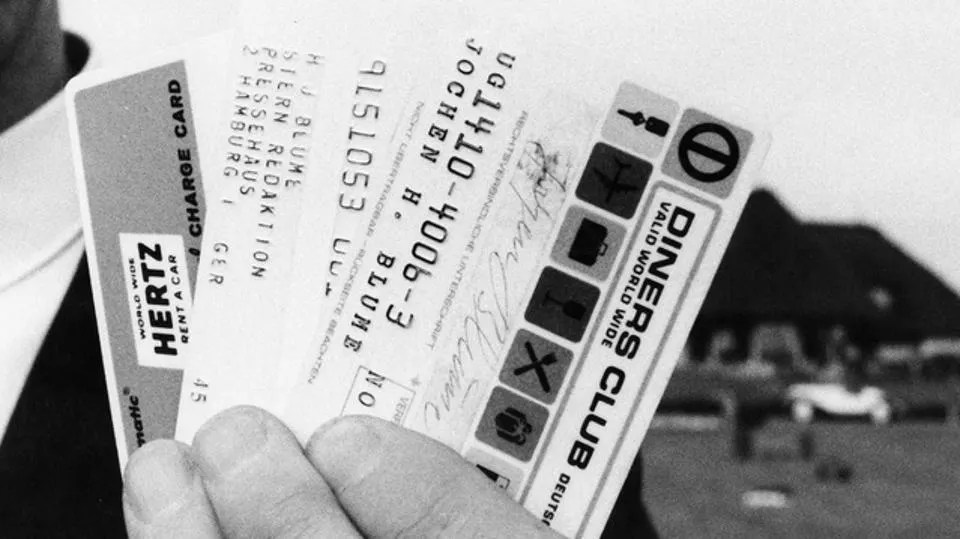
Today, every card we carry — credit, debit, ATM, driver’s license, identity card, even transit passes — follows the same ID-1 format of 85.60 × 53.98 mm, as defined by ISO/IEC 7810. The standard doesn’t stop at size — it specifies resistance to bending, heat, chemicals, humidity, and even toxicity. Someone, decades ago, looked ahead and thought about the future, setting common requirements, testing methods, and measurements that allow you and me to step into a shop halfway across the world and walk out, transaction complete, celebration intact.
Standardization — one of the core pillars of Quality… and the quiet reason your beautiful day in Spain ends with 40% off boots in a bag, Rioja in your glass, olives falling off the table, and not you trying to explain traveler’s checks to a very confused Gen Z bartender.
 ROOHISM